
All About Carbonara and How to Prepare It the Italian Way!
If you love Carbonara as much as I do, you’re in the right place. I am not a food blogger, I am not here to tell you the story of how my grandmother used to make carbonara, I am not here to make any money or recommend any partner ingredients or tools. I am just an Italian who loves carbonara, and I’m here to share everything I know about this fantastic dish—how to stick to the roots and how to tweak it a bit without losing its soul. Let’s make some magic in the kitchen together!
Jump to the Recipe
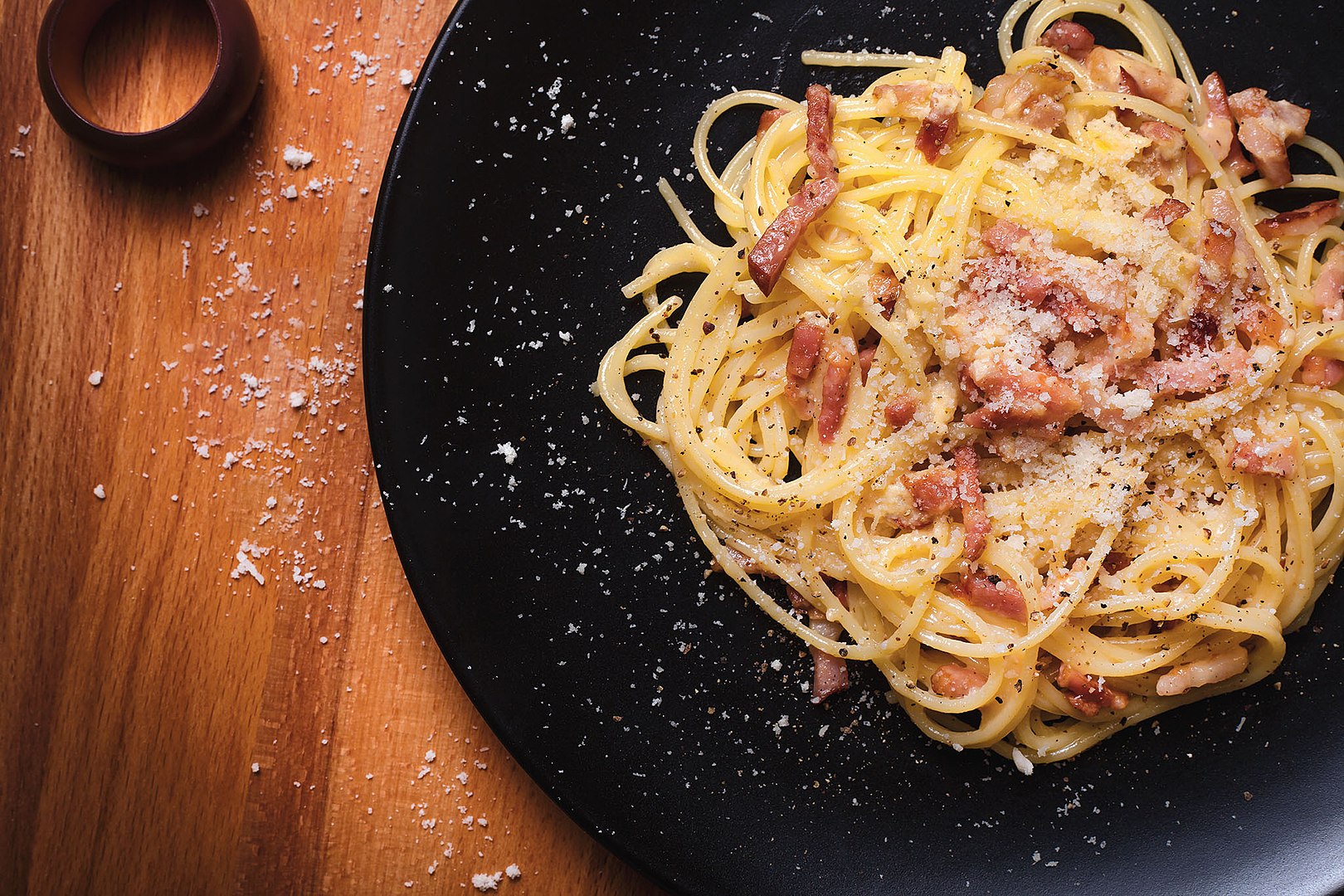
What is Carbonara?
It’s a classic dish from the Italian capital, Rome, that’s all about simplicity and quality. Made with just pasta, eggs, Pecorino Romano cheese, guanciale, and a good crack of black pepper, it’s pure comfort in a bowl. No cream (of any type!) or onions—yes, you heard that right!
On this website, you’ll learn what the traditional authentic recipes is. Besides that though, you’ll learn how you can variate the recipe a bit to still have a fairly traditional carbonara, while being more flexible on the ingredients.
What is the Carbonara Sauce Made of?
It’s just egg yolks and grated cheese. Salt and pepper to taste. Why doesn’t traditional Carbonara use cream? The real magic happens when the hot pasta meets the mix of eggs and cheese, creating that creamy sauce we all love. And don’t make the mistake to let your eggs mixture overcook! You’ll end up with scrambled eggs in your pasta, which is not exactly what you want.
Ingredients Replacement
If you’re struggling to find some of the ingredients, or just don’t want to use spaghetti that is fine. Here is how you can variate the recipe slightly and still get a great carbonara:
- Guanciale: instead of guanciale you can use diced bacon. It’s readily available and easy to find anywhere. I sometimes used the smoked variant, but that’s just personal preference.
- Spaghetti: any pasta can replace spaghetti. My mom used to make it with penne.
- Pecorino: this is hard to replace, but if you really don’t like the salty flavor, you can use another type of hard cheese. Just don’t use any creamy/fresh or sweet cheese.
What Not to Put in Carbonara?
- Heavy cream/Cooking cream: absolutely not. If you want to put it, go ahead and do it, but don’t go around saying that you make Carbonara, because you do not.
- Onions: unless you’re French, don’t add onions. If you’re French, feel free to add them, but same as the folks who add cream, don’t go around saying that you make Carbonara, because neither you do.
My Carbonara Recipe
Ingredients
- Pasta: Preferably spaghetti, 75g (about 2.65 oz) per person
- Eggs: 1 large egg per person. I like to add 1 extra egg for every 2 people
- Pecorino Romano Cheese: I go by heart. Adjust to taste (explained in steps below)
- Guanciale: 100g (about 3.5 oz) per person, for that meaty goodness. Use less if you prefer it less meaty.
- Salt and Black Pepper: To taste
Instructions
Prepare the Guanciale
Dice the guanciale (or bacon if substituting) and sear it in a pan over medium heat. Do not add oil; the fat from the guanciale will render out. Cook to your desired level of crunchiness—just shy of too crunchy is perfect. Once done, turn off the heat.
Cook the Pasta
Fill a large pot with cold water and bring to a boil (100°C/212°F). Add a pinch of granulated salt once its bubbling. Add the pasta and cook according to the package instructions, aiming for al dente—firm to the bite but just cooked through.
Make the Sauce
While the pasta cooks, separate the egg yolks from the whites (save the whites for another use, like a light frittata). In a bowl, beat the yolks with grated Pecorino Romano cheese, salt, and pepper. Keep adding cheese until the sauce is creamy yet thick. Note: Pecorino is salty, so add salt cautiously.
Combine
Before draining the pasta, reserve a spoonful of the pasta water. Drain the pasta and then return it to the pan (heat off). Quickly mix in the guanciale and then add the egg and cheese mixture, stirring vigorously to combine. The heat from the pasta will cook the eggs slightly and create a creamy sauce. If the sauce is too thick, add a little reserved pasta water to loosen it.
Serve Immediately
Transfer the Carbonara to plates, top with a bit more grated cheese and a sprinkle of black pepper. Serve immediately to enjoy the best texture and flavor. Waiting too long can cause the sauce to dry out and the pasta to become sticky.
What If I Want to Add Cream?
Well, just add it. But you’re not making Carbonara! You’re making pasta with cream and bacon, don’t fool yourself.
 Carbonara Rocks